
The Moment You Notice It
You're pulling the car in after a storm rolled through, and as the door grinds down behind you, you see it: the bottom panel doesn't quite meet the floor on one side. There's a gap you could slide a flat bar into. Or maybe you glance up and notice the emergency release cord hanging low enough that someone standing outside could snag it with a coat hanger through the seal at the top of the door. Once you see it, you can't unsee it. That gap, that dangling cord, that window panel you can see straight through — these are the details burglars look for during a slow walk down the street, and most homeowners never clock them until something goes wrong.
How Burglars Actually Get In
Garage break-ins are rarely dramatic. They're fast, quiet, and they exploit a handful of predictable weak points.
- The coat hanger trick. If there's any gap along the top or side of the door — common once weatherstripping dries out or a panel warps from humidity — a thin tool can be slid through to snag the emergency release cord and pop the door open by hand in seconds.
- Prying the bottom corner. Older doors, especially ones with rust forming near the base from salt air or swelling from moisture, often have weaker locking points. A pry bar at the corner can pop the door off its track before an opener even has a chance to resist.
- Code grabbing. Older openers using fixed codes (rather than rolling codes) can be captured with inexpensive devices and replayed to open the door remotely. This is less common than physical force, but it still shows up with openers that haven't been replaced in over a decade.
- The cracked door. In Venice's heat, it's tempting to leave the garage door cracked a few inches for airflow while working in the garage or waiting out a power blip. That gap is visible from the street and tells anyone walking by that the garage — and often the side door into the house — is unguarded.
- Window panels. Decorative windows across the top of the door look nice, but they let anyone glance in and see whether a car is home, what tools are visible, and whether the interior door to the house is unlocked.
Habits That Close the Gaps
Most of this costs nothing and takes seconds.
- Close the door fully, every time. Don't idle with it cracked for ventilation, even briefly. If you need airflow while working, use a fan instead.
- Keep the remote out of your car. If a vehicle gets broken into, a clipped-on garage remote hands over access to your house. Use a keychain remote or your phone instead.
- Deadbolt the interior door. The door between the garage and the house should have its own deadbolt, not just a doorknob lock. A garage breach shouldn't automatically mean a house breach.
- Watch for storm-season habits. During hurricane season, people prop doors open for ventilation while running generators or airing out a humid garage after a storm. If you need to do this, stay in sight of the door or close it the moment you step away.
- Cover or frost garage windows. A roll of frosted film is inexpensive and blocks the view in without blocking light.
Hardware That Actually Stops a Break-In
Habits help, but hardware closes the gap for good.
- A zip-tie or shield on the emergency release. A simple zip tie looped through the release lever (easy to cut from inside in an actual emergency) stops the coat-hanger trick cold. Shield covers do the same job more permanently.
- A rolling-code opener. If your opener is more than 10–15 years old, it's worth checking whether it still uses a fixed code. Rolling-code systems generate a new code with every use, making code-grabbing devices useless.
- A slide lock or track-mounted deadbolt. These physically lock the door to its track, adding real resistance against prying, especially useful on older doors where the panel locking points have weakened from rust or warping.
- Motion-sensor exterior lighting. Cheap, effective, and especially useful along the side or back of the garage where someone might linger unseen.
- A heavier-gauge, wind-rated door. If you're already due for a replacement because of storm damage or wear, wind-load rated doors built for Sarasota County's hurricane requirements use thicker steel. That added strength resists prying the same way it resists wind pressure — a side benefit worth knowing about if you're comparing options.
When It's Time to Call Venice Garage Door Experts
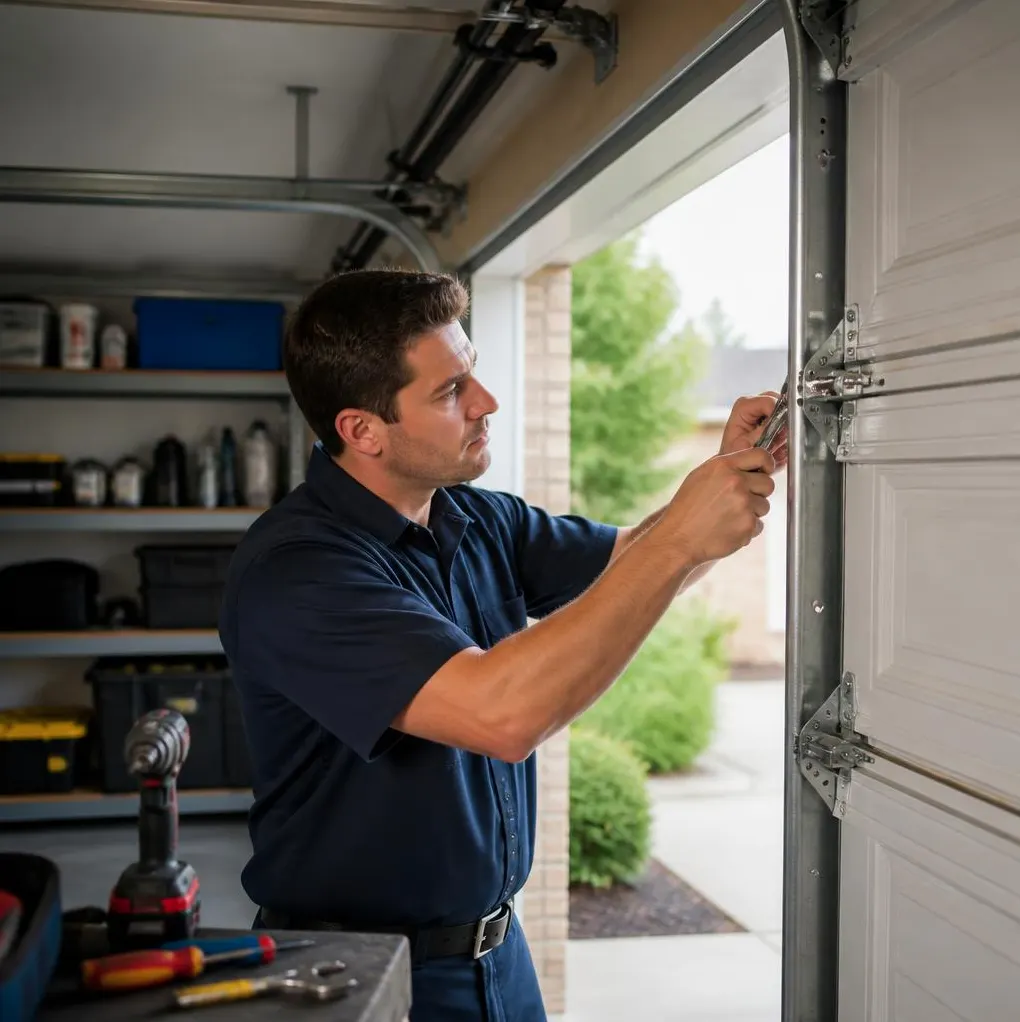
If you've noticed a gap along the bottom or sides of your door, a track that's bent or rusted, or an opener that still uses a fixed code, don't wait for it to become an actual break-in story. Our Off Track Door Repair service fixes the alignment issues that create those pry-friendly gaps in the first place, and our Garage Door Opener Installation service can get you onto a modern rolling-code system with a secured emergency release. We also run full Garage Door Tune-Up & Maintenance visits that check locking points, rollers, and cables for the rust and wear that salt air and humidity cause over time — the same wear that makes a door easier to force open.
If something about your garage door doesn't sit right, trust that instinct. Call Venice Garage Door Experts for fast, honest service across Venice, Nokomis, Osprey, Englewood, North Port, Sarasota, Laurel, and Punta Gorda — we offer same-day availability to get your home secured before it becomes a problem.